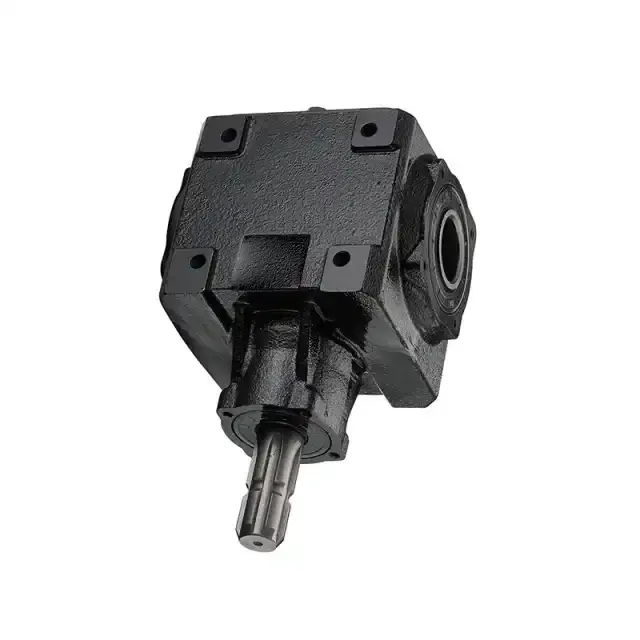
Buyers searching for a rotavator gearbox and buyers searching for a rotary tiller gearbox are often looking for the same part: the agricultural gearbox that takes power from a tractor PTO and drives the tiller's rotor.
This article explains where the names overlap, where a "same name" still hides a different layout, and what to include when you ask Scican Machinery to review a model from the rotary tiller gearbox category.
The two names usually describe the same drive
In most purchasing conversations, "rotavator" and "rotary tiller" refer to a tractor-mounted, PTO-driven implement with a rotating blade or tine rotor. The implement prepares a seedbed, mixes residue or fertilizer into the soil, or works between rows in vineyards and orchards. The gearbox sits in the path between the PTO input and that rotor.
Scican Machinery lists this family as rotary tiller gearboxes and also describes them as rotavator gearboxes. The category states that these units transmit PTO power to tiller blades for seedbed preparation, stubble incorporation, and vineyard tillage. The same product family is offered under both names. If you already have a machine, use the name in its manual, but also state the implement type in plain terms — a PTO-driven rotary tiller or rotavator — not only a model code.
Where the names differ by market
"Rotavator" is the everyday word in many Commonwealth markets, including the United Kingdom, India, Australia, and parts of Africa. It began as a brand name and later became a generic term for the implement. "Rotary tiller" is more common in North America and in a large share of export catalogues. "Rotary cultivator" appears in some European and technical texts; it sometimes means the same machine, and sometimes a lighter, shallower inter-row tool.
None of these labels, on its own, tells a supplier the mounting face, the shaft ends, or the required ratio. Write the market term you use, then add the machine facts behind it.
What is not the same, even when the name matches
Walk-behind machines and tractor-mounted implements
A frequent source of confusion is the walk-behind "power tiller" common in some South Asian and Southeast Asian procurement lists. That machine is typically a single-axle, operator-guided unit with its own engine and a different driveline. A gearbox specified for a three-point, tractor-mounted rotavator is not automatically the correct part for a walk-behind tiller, and the reverse is also true. State clearly whether the implement is tractor-mounted and PTO-driven, or a walk-behind machine.
Center-drive and side-drive layouts
Two rotary tillers can share a name and still place the gearbox in different positions. In a center-drive layout, power often passes from the PTO through a central gearbox toward the rotor. In a side-drive layout, the gearbox may feed a lateral shaft, chain case, or gear case that drives the rotor from one end. These layouts are not interchangeable just because both units are sold as tiller or rotavator gearboxes.
When you compare models, identify where the gearbox sits in the drive and what it connects to on the output side. A catalogue speed or ratio that describes an intermediate shaft is not the same as the speed of the rotor that carries the tines.
What this gearbox does on the machine
On a tractor-mounted tiller, the PTO shaft usually runs along the tractor's fore-aft line, while the rotor runs across the working width. The gearbox receives that input, changes the direction of the drive where the design requires it, and delivers the output to the blade shaft or to the next stage of the transmission.
Scican's rotary tiller gearbox category lists models for light, medium, and heavy tiller frames. The published description emphasizes sealed housings, a blade-shaft output, and ratios suited to 540 rpm and 1000 rpm PTO classes on compact and utility tractors. Those points are a starting filter, not a substitute for checking the tractor's input speed, the required rotor motion, and the implement's mounting dimensions.
Current models listed in that category include SC-01-672, SC-01-674, SC-20100.131, SC-9.259, and SC-AM281-874. Compare product pages on mounting dimensions, shaft type, rotation direction, ratio, and working load — not on the model name alone. Do not assume a ratio or torque figure from another manufacturer's article. If the nameplate or drawing does not state a value, leave that field as unknown and supply photographs and measurements instead.
What to send before you compare models
A useful inquiry describes the implement and the existing drive, not only the search term.
For a new machine, send the tiller or rotavator drawing or model, the rotor arrangement, the intended gearbox position, the required input and output directions, and the space available in the frame. If a ratio or speed is specified, say which drawing or manual it comes from.
For a replacement, photograph the gearbox while it is still installed, then photograph the nameplate, mounting face, shaft ends, and every side after removal. Measure mounting-hole spacing, accessible shaft dimensions, and clearance inside the frame. If the machine has been repaired or modified, say so: the installed unit may not be the original factory configuration.
Also record:
Tractor PTO speed in use, commonly 540 rpm or 1000 rpm, if known
Required rotor speed and rotation direction, with the viewing direction stated
Input and output shaft type: keyway, spline count and outside diameter, or other connection
Known symptoms such as oil leakage, noise, or vibration, without guessing the failed part
Quantity, destination, and whether the parts are for a single repair, stock, or new machine assembly
A short request that only says "rotavator gearbox" or "rotary tiller gearbox" does not give enough information to confirm fit.
Pair the gearbox with the PTO shaft
The gearbox is only one part of the path from the tractor. A complete PTO shaft assembly carries torque from the tractor stub to the implement gearbox. As the three-point hitch lifts or the tractor turns, telescopic tubes keep the shaft engaged and universal joints allow for changes in angle.
When you request a tiller or rotavator gearbox, also describe the existing PTO shaft: compressed and extended length if you can measure them safely with the machine shut down and supported, yoke or spline ends, whether a guard is fitted, and any overload device such as a shear bolt or slip clutch. A gearbox that matches the housing can still be a poor installation if the shaft runs at a steep angle or the guard cannot be refitted.
How to inquire
Open the rotary tiller gearbox category to confirm you are looking in the right product family, then send one message with the implement type (rotary tiller or rotavator), whether it is tractor-mounted, the drive layout if you know it, photographs, measured dimensions, known speeds or ratios, quantity, and destination.
Scican Machinery can review a standard replacement or a custom requirement against the actual machine. The category narrows the search; the implement decides whether a listed model is a practical candidate.
For a review of a rotavator or rotary tiller gearbox, or of the PTO shaft that drives it, send the details above through the contact page. The team will follow up on the information you provide.
Application reference for machinery buyers
Use this article as a practical reference when comparing agricultural gearbox, PTO drive shaft, disc blade, or rotary cutter component requirements.
For a precise recommendation, prepare the machine type, working conditions, shaft or blade dimensions, required ratio or torque, installation photos, and any existing nameplate information before inquiry.
Scican Machinery can review standard replacement needs and custom component requirements, then confirm the practical next step for quotation or technical discussion.
When a case mentions South American field work, rotary cutters, seeders, or heavy residue, focus on the load pattern behind the example. Crop residue, soil moisture, tractor horsepower, daily working hours, and operator habits all affect gearbox selection. These details help separate a general product match from a practical field recommendation.
Before comparing models, write down the input speed, output speed, shaft direction, mounting face, center distance, lubrication method, and any known failure symptoms. If the old part overheated, leaked oil, broke teeth, or produced noise, include that symptom with photos. The same model name can still require a different review when the working load or installation space changes.
For replacement projects, send photos from several angles: the complete implement, gearbox housing, input shaft, output shaft, mounting bolts, blade carrier, and nameplate. A ruler or caliper in the photo helps confirm scale. If drawings are available, include the shaft diameter, spline count, keyway size, hole spacing, and housing height.
For batch purchasing, explain whether the parts are for maintenance stock, distributor inventory, or new machine assembly. Quantity, target market, packaging needs, destination country, inspection requirements, and expected delivery time all affect how the quotation is prepared. Clear purchasing context reduces repeated emails and makes technical confirmation faster.
If the article describes a gearbox used with rotary cutters, seeders, or other field implements, also check the surrounding parts. A gearbox that looks correct can still fail early when the PTO shaft angle is too steep, the blade carrier is unbalanced, the mounting surface is distorted, or lubrication intervals are ignored. Sharing these surrounding conditions gives the technical review a more complete picture.
Maintenance information is useful even when the purchase is for a new unit. Tell us whether the implement works seasonally or year-round, whether the operator can inspect oil level regularly, and whether spare seals, bearings, or shafts are needed with the order. These notes help buyers compare total operating reliability, not only the first purchase price.
Custom review is usually needed when the old gearbox is no longer available, the implement maker changed the mounting pattern, or the buyer wants a different shaft, ratio, housing, or output direction. In those cases, the article can help define the application, but drawings and measurements still decide whether the project is realistic.
This article should be treated as an application guide, not a final specification sheet. The practical next step is to compare the article scenario with your own machine, then send the missing details for review. Scican Machinery can use that information to confirm whether an existing gearbox, an adapted configuration, or a custom component discussion is the right path.
Inquiry checklist for replacement and custom parts
Start with the practical job that the machine must complete. For a rotary cutter, explain the crop residue, cutting height, tractor horsepower, PTO speed, blade carrier size, and expected working hours. For a seeder, explain soil type, row spacing, planting speed, and whether the drivetrain must handle sudden load changes. The same gearbox family can behave differently when the field load, implement weight, and operator habit change.
Record the existing part before removing it from the machine. Useful photos include the complete implement, the old gearbox mounted in place, the input shaft, output shaft, mounting face, bolt holes, seals, oil plug, and any nameplate. A photo with a ruler or caliper helps confirm scale. When a shaft has splines, count the spline number and measure the outside diameter instead of relying only on the model name.
Measure the mounting area carefully. Buyers often compare the overall housing height, input shaft position, output shaft position, flange size, bolt spacing, shaft direction, and clearance around guards or frames. A gearbox that matches the ratio can still be unsuitable if the housing touches the implement frame or if the shaft direction forces the PTO to work at an unsafe angle.
Describe the failure reason if this is a replacement project. Broken teeth, oil leakage, overheating, cracked housing, bearing noise, seal damage, or repeated shaft wear each points to a different review path. A direct replacement may be enough for normal wear, but repeated failure can mean the application needs another ratio, stronger housing, better lubrication practice, or a review of nearby components.
For batch purchasing, separate technical confirmation from commercial confirmation. Technical confirmation needs drawings, photos, dimensions, ratio, torque, speed, and material expectations. Commercial confirmation needs quantity, destination country, packaging method, inspection requirement, delivery window, and whether the order is for maintenance stock, distributor resale, or new machine assembly. Clear separation makes the quotation faster and reduces repeated questions.
If the article describes an application case, compare the case with your own use instead of copying it directly. South American rotary cutter work, seeders in mixed soil, and industrial power transmission each have different load patterns. The useful lesson is the selection logic: identify load, confirm fit, check surrounding parts, and then decide whether a standard model or customized configuration is practical.
Maintenance context also matters during a purchase discussion. Share whether the equipment works seasonally or every day, whether operators can check oil level, whether seals and bearings are easy to service, and whether spare parts should be shipped with the main unit. These details help compare long-term operating reliability instead of only comparing the first purchase price.
When drawings are available, include them early. A simple drawing with shaft diameter, keyway, spline count, center distance, mounting hole spacing, housing height, rotation direction, and ratio can prevent misunderstandings. If there is no drawing, clear photos plus measured dimensions are still useful. The goal is to turn a general product inquiry into a review that can be checked by engineering and sales together.
For custom components, be clear about what can change and what must remain fixed. Some projects only need a shaft, seal, or mounting adjustment; others need a different housing, bearing arrangement, ratio, output direction, or material choice. Custom review is more realistic when the buyer explains the target machine, working environment, annual quantity, expected service life, and any previous supplier problem.
Quality confirmation should be discussed before the order is finalized. Ask which dimensions will be checked, whether sample confirmation is needed, how packaging protects shafts and machined surfaces, and whether photos or inspection notes can be shared before shipment. For maintenance buyers, a small documentation set can be more useful than a long catalog page because it connects the shipped part with the machine that will receive it.
Logistics details can also affect the final recommendation. Heavy gearbox parts, long PTO shafts, and sharp disc blades have different packing and transport needs. Tell the supplier whether the shipment goes to a workshop, distributor warehouse, farm, or machine builder. Destination, unloading conditions, labeling needs, and spare-part grouping can change how the order should be packed and how the delivery schedule should be planned.
Before sending the inquiry, prepare one concise message: machine type, application, old part photos, key dimensions, ratio or speed requirement, quantity, destination, and expected timing. This article can help organize the questions, but the final recommendation depends on the real machine data. Scican Machinery can then review whether an existing product, adapted configuration, or custom discussion is the right next step.
Article FAQ
How should I use this article before sending an inquiry?
Use it to identify the machine type, application, working load, and product details that need confirmation. Then send photos, dimensions, quantity, and any nameplate information with the inquiry.
Can Scican Machinery review a similar application that is not shown in the article?
Yes. If the application is similar but not identical, share the working conditions, drawings, installation space, and replacement target so the team can review whether a standard or adapted component is practical.
What details make the technical reply faster?
Clear photos, mounting dimensions, shaft or blade size, ratio, torque estimate, usage frequency, destination country, and expected quantity help reduce repeated emails and improve the first technical reply.